When you commute by bicycle, you save money, boost your fitness, and help the environment. Cyclists often see lower obesity rates and a 30% drop in overall death risk compared to car commuters. If you want comfort, speed, or need to travel far, a car might suit you better. About 9% of Americans choose to commute by bicycle, while 72% drive. Think about your health, wallet, and daily needs as you decide which way works best for you.
Key Takeaways
Bike commuting saves money because you do not pay for gas or parking. It also helps you get fit and feel better mentally.
Biking is good for the environment. It does not make pollution and helps keep city air clean.
Car commuting is more comfortable. Cars protect you from bad weather. Cars are faster for long trips or when you travel with others.
Biking is hard when the weather is bad. You need to use your body and watch out for cars.
Cars are expensive to buy and fix. They make pollution and can cause traffic jams and parking problems.
You should pick bike or car based on how far you go, your health, your money, the weather, and what you need to carry.
You can mix biking, driving, or use public transit. This can make your trip easier, healthier, and better for the environment.
Small changes like biking once a week or carpooling can make your trip better and help you feel less stressed.
Bike Commuting Pros
Cost Savings
Lower Expenses
Bike commuting can help you save a lot of money. You do not pay for gas or parking. You also avoid expensive car repairs. Keeping a bicycle working costs much less than a car. You only spend a little on gear and tune-ups. These savings add up over time. If you want to spend less each month, biking is a great choice.
No Fuel Needed
When you ride a bike, you do not need gas. You use your own energy to move. You never worry about gas prices going up. You also do not have to look for a gas station. This makes bike commuting easier for many people.
Health Benefits
Physical Fitness
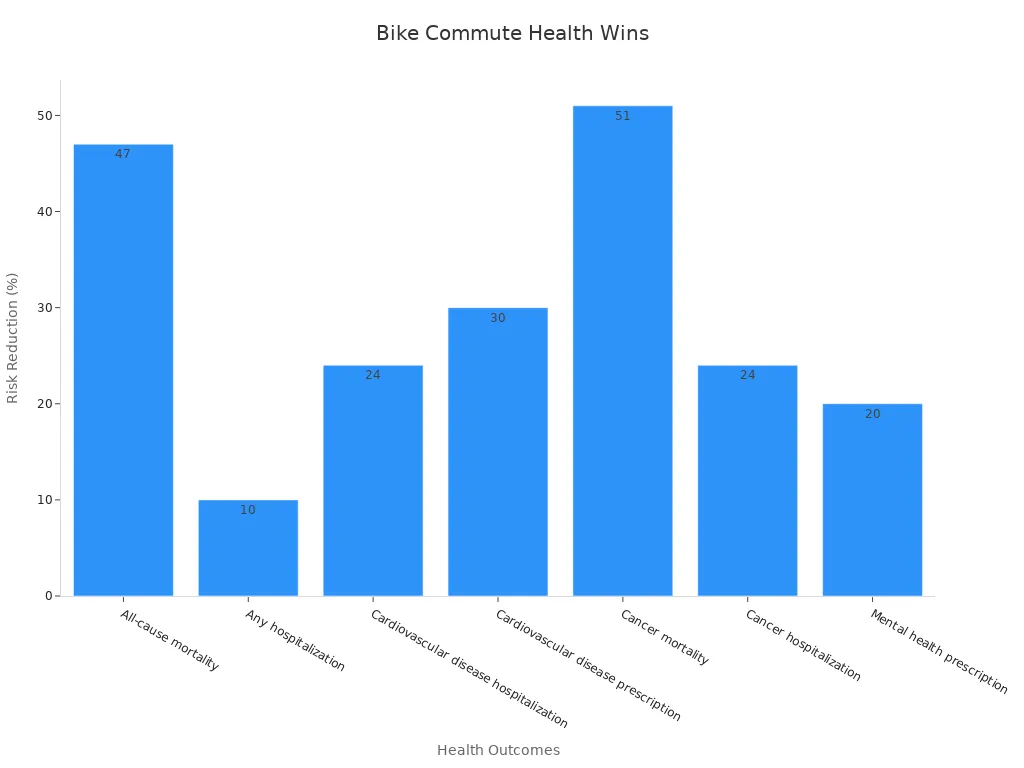
Biking to work or school keeps you active. You get exercise every day just by riding. This helps your heart and controls your weight. It also lowers your risk of getting sick. The table below shows how biking helps your health:
Health Outcome | Risk Reduction for Bike Commuters vs Non-Active Commuters |
|---|---|
All-cause mortality | |
Any hospitalization | 10% lower risk |
Cardiovascular disease hospitalization | 24% lower risk |
Cardiovascular disease prescription | 30% lower risk |
Cancer mortality | 51% lower risk |
Cancer hospitalization | 24% lower risk |
Mental health prescription | 20% lower risk |
Mental Well-being
Biking is good for your mind too. It can make you feel happier and less stressed. Many people say they feel better after biking. Studies show bike commuters need fewer mental health prescriptions. You get fresh air and sunshine. You also avoid traffic jams. This is a big reason why biking can improve your daily life.
Tip: Active travel like biking is good for your health. You also save money and help the environment.
Environmental Impact
Zero Emissions
Biking does not create tailpipe emissions. This helps keep the air clean in your city. Almost half of shared bike trips replace car trips. This cuts down on pollution and greenhouse gases. If you care about the planet, biking is a great choice.
Less Traffic Pollution
Biking helps lower traffic and pollution. Shared bikes have a much smaller carbon footprint than cars. Riding one kilometer on a bike makes only about 3.15 grams of CO2. That is much less than a car. More bikes mean less traffic and cleaner air. You help make your city healthier and greener.
Many shared bike trips replace car trips, so there is less pollution.
Shared bikes have a smaller carbon footprint than private bikes because people use them more.
Biking works best for short trips under 3 kilometers.
Using bikes with public transit makes cities even more sustainable.
Urban Flexibility
Avoid Traffic Jams
You know how frustrating it feels to sit in a car, stuck in a long line of traffic? With bike commuting, you can skip those jams. You glide past cars and buses, using bike lanes or quieter streets. In big cities like Beijing and Shanghai, studies show that more people riding bikes means less traffic for everyone. When bike-sharing programs started, traffic delays dropped by about 13%. That means you spend less time waiting and more time moving.
Bike commuting helps reduce city congestion.
More bikes on the road mean fewer cars, which makes travel faster for everyone.
Bike-sharing connects you to buses and trains, making your whole trip smoother.
Bike lanes also make things safer and easier. You get your own space, so you do not have to worry as much about cars. This makes your ride less stressful and more enjoyable.
Easy Parking
Finding a parking spot for a car can take forever. You circle the block, hoping someone leaves. With a bicycle, you do not have this problem. You can park almost anywhere. Many cities have special racks just for bikes. You lock up, walk away, and get on with your day. No more parking tickets or expensive garages.
Tip: If you use a shared bike, you can leave it at a docking station or in a safe spot. This saves even more time and hassle.
Stress Reduction
Outdoor Enjoyment
Biking to work or school lets you enjoy the outdoors. You feel the breeze on your face and see the world around you. This simple change can lift your mood. When you ride, your body releases endorphins. These are chemicals that make you feel happy and calm. Regular biking also helps you sleep better and think more clearly.
A recent study from Scotland looked at almost 380,000 people. It found that those who biked to work needed fewer prescriptions for anxiety and depression than drivers. Even after checking for other factors, biking still helped lower stress. So, swapping your car for a bike can make your mind feel lighter.
Community Engagement
When you ride a bike, you notice more about your neighborhood. You might wave to neighbors or stop at a local shop. Bicycling brings you closer to your community. You become part of the city’s daily life, not just someone passing through in a car.
You meet new people at bike racks or on trails.
You support local businesses by stopping in more often.
You help make your city friendlier and more connected.
Bike commuting does more than get you from point A to point B. It helps you feel good, stay healthy, and connect with the world around you.
Bike Commuting Cons
Weather Issues
Rain and Snow
You might love riding your bike on sunny days, but weather can quickly become a big challenge. Rain, snow, and even extreme heat can make your commute tough or even dangerous. Wet roads get slippery, and snow can hide hazards like potholes. Sometimes, you may have to skip your ride because the weather is just too harsh. Studies show that weather is a major factor in cycling safety and comfort. When temperatures get too high or too low, fewer people use bike-sharing programs. In fact, extremely high temperatures can cause a drop in bike trips and even lead to more people driving cars, which increases carbon emissions.
Statistical Measure | Description |
|---|---|
Reduction in bike-sharing trips at extremely high temperatures | Fewer people use bikes and more use cars, raising emissions. |
Economic loss due to extreme temperatures | About 31,393.82 CNY lost each year from fewer bike trips. |
Increase in carbon emissions | An extra 2,585.29 kg of carbon released yearly when people switch from bikes to cars. |
Trip type variations with temperature extremes | Cold weather means more short trips; hot weather means fewer short trips. |
Impact on multi-modal travel | Cold boosts bike use with other transport; heat does the opposite. |
Need for Gear
When you ride in bad weather, you need special gear. Rain jackets, waterproof pants, gloves, and even shoe covers help keep you dry and warm. In winter, you might need thermal layers and lights for dark mornings. Buying all this gear can add up. You also have to remember to pack it every day. If you forget, you could end up wet, cold, or uncomfortable for the rest of your day.
Tip: Keep a small bag with your rain gear and extra clothes at work or school. This makes surprise weather less of a problem.
Physical Effort
Fitness Required
Riding a bike takes energy. If you have a long or hilly route, you need to be in decent shape. Some people find it hard to start biking if they have not exercised in a while. You might feel tired or sore at first. Over time, your body gets stronger, but the first few weeks can be tough.
Fatigue Risk
Even if you ride often, some days you just feel tired. Maybe you had a late night or you are not feeling well. On those days, biking can feel like a chore. You might arrive at work sweaty or worn out, especially if your commute is long or the weather is hot. This is one of the main cons for people who want a low-effort way to get around.
Safety Concerns
Mixed Traffic Risks
Sharing the road with cars, buses, and trucks can be scary. Not every city has safe bike lanes. Sometimes, you have to ride next to fast-moving vehicles or cross busy intersections. Research shows that intersections without clear bike signals or with poor visibility put you at higher risk for crashes. Cramped sidewalks and blocked lanes can force you into traffic, where drivers may not see you or may act unpredictably.
Cramped sidewalks push you into busy streets.
High-speed roads with unclear markings make riding dangerous.
Shared lanes with buses and lots of people create confusion.
Poor lighting at intersections makes you harder to see.
Many riders say they feel less safe in mixed traffic, especially when bike lanes are just painted lines or are blocked by parked cars. Separated bike paths feel much safer, but you may not always have that option.
Limited Protection
When you ride a bike, you do not have much to protect you in a crash. Cars have seat belts, airbags, and a metal frame. On a bike, you only have a helmet and maybe some pads. If you fall or get hit, you can get hurt more easily. This risk makes some people nervous about choosing a bike for their daily commute.
Note: Always wear a helmet and use lights to help drivers see you, especially at night or in bad weather.
Range and Speed
Not for Long Distances
A bike works best for short trips. If you need to travel far, you might find it hard to keep up. Most people feel comfortable riding a bike for about three to five miles. Anything longer can take a lot of time and energy. You may arrive at your destination feeling tired or sweaty. If your job or school is across town, a bike might not be the best choice.
Some cities have bike paths that help you go farther, but not every place does. You might also face hills or rough roads. These can slow you down and make your ride harder. If you need to get somewhere fast, a bike may not meet your needs.
Note: Electric bikes can help with longer trips, but they cost more and need charging.
Slower for Far Commutes
You move slower on a bike than in a car or on a train. If you have a long commute, you will spend more time on the road. A car can cover ten miles in about fifteen minutes. A bike might take forty minutes or more for the same distance. This extra time can add up each week.
Here is a quick look at average speeds:
Mode of Travel | Average Speed (mph) | Time for 10 Miles |
|---|---|---|
Car | 30 | 20 minutes |
Bike | 10-15 | 40-60 minutes |
Bus | 12 | 50 minutes |
You may also have to stop at more lights or wait for traffic to pass. If you are in a hurry, a bike might not be the fastest way.
Cargo Limits
Small Loads Only
A bike cannot carry as much as a car. You have to think about what you need to bring with you. A backpack or small basket works for a few items. If you need to carry groceries, sports gear, or work supplies, you may run out of space fast. Heavy or bulky items are hard to manage on a bike.
Some bikes have racks or panniers, but these only hold so much. You might need to make more trips or leave things behind.
Limited Storage
You do not get a trunk or back seat with a bike. Storage is always limited. If you want to bring a change of clothes, lunch, or a laptop, you need to plan ahead. Rain gear, locks, and lights also take up space. Sometimes, you have to choose what is most important to carry.
Tip: Use a sturdy backpack or add a basket to your bike for extra room. Try to pack light and only bring what you need.
A bike is great for simple trips, but not for moving lots of stuff. If you often need to carry big loads, you may want to look at other options.
Car Commuting Pros
Comfort
Weather Protection
You never have to worry about getting soaked or freezing when you drive a car. Rain, snow, or blazing sun—your car keeps you safe from it all. You can leave your umbrella at home and skip the raincoat. Your car acts like a shield, so you arrive at work or school dry and comfortable every time.
Climate Control
Inside your car, you control the temperature. Feeling cold? Turn up the heat. Too hot? Blast the air conditioning. You can even adjust the fan or seat warmers if your car has them. This makes every ride more pleasant, no matter what the weather looks like outside.
Speed and Range
Long Distance Travel
Cars help you cover long distances quickly. If you live far from your job or school, driving saves you time and energy. Many people drive more than 12 kilometers each way, and some even travel over 100 kilometers in a single commute. You do not have to worry about getting tired or sweaty. Just sit back and let the car do the work.
Highway Use
Highways make car commuting even faster. You can travel at higher speeds and skip stoplights. This is great for people who need to get across town or visit places outside the city. Cars handle busy roads and long stretches with ease. You can listen to music or a podcast while you drive, making the trip feel shorter.
Cargo and Passengers
Large Loads
One of the biggest pros of car commuting is the space you get. You can pack groceries, sports gear, or even furniture in your trunk. Bikes and buses just cannot match this. Cars handle heavy or bulky items with no problem. You do not have to leave anything behind.
Group Travel
Cars make it easy to travel with friends or family. You can give rides to coworkers or take your kids to school. During busy hours, most people choose cars for group trips. This helps everyone arrive together and on time.
Here’s a quick look at how cars handle commuting needs:
Aspect | How Cars Make Commuting Easier |
|---|---|
Share of Commuters | |
Distance Covered | Average car commutes reach up to 163 km for long trips |
Speed & Comfort | Cars offer higher speeds and comfort, especially on highways |
Group Travel | Cars handle large groups during peak hours |
Cargo Capacity | Trunks and back seats fit big or heavy loads |
Tip: If you need to carry a lot or travel with others, a car gives you the space and flexibility you need.
Convenience
Flexible Timing
You get to set your own schedule when you drive a car. You do not have to wait for a bus or train. You can leave your house whenever you want. If you need to stop for coffee or pick up a friend, you just do it. Your car gives you the freedom to plan your day your way.
Many people love this kind of control. You do not worry about missing a ride or being late because of someone else’s schedule. If you work late or need to run errands after school, your car is always ready. You can even change your plans at the last minute. This flexibility makes life easier, especially if you have a busy routine.
Driving also helps when you face bad weather. You do not have to stand outside in the rain or snow, waiting for a ride. You just hop in your car and go. Still, snowy weather can make driving harder. Roads get slippery, and traffic slows down. Some people feel more stress and worry about safety during these times. You might see more traffic jams and longer travel times. In some cities, snow can even close roads or make driving risky. When this happens, some drivers switch to the subway or park-and-ride lots to avoid the hassle.
Note: During snowy days, many travelers care more about safety and comfort. Some choose other ways to get around, like the subway, when driving feels too stressful.
Here’s a quick look at how weather can affect your car commute:
Weather Condition | What Happens to Your Commute? |
|---|---|
Rain | Slower traffic, but you stay dry and warm |
Snow | More stress, possible delays, sometimes safer to use public transit |
Hot/Cold | You control the temperature inside your car |
Privacy
A car gives you your own private space. You do not have to share your seat with strangers. You can listen to your favorite music, sing along, or just enjoy the quiet. No one bothers you. You can talk on the phone, eat breakfast, or even have a quick chat with your family.
Privacy matters to a lot of people. You might feel more relaxed when you have your own space. You do not have to worry about crowded buses or noisy trains. Your car is like your own little world on wheels.
You control the music and temperature.
You can keep personal items in your car.
You decide who rides with you.
Tip: If you value alone time or need to focus before work or school, a car gives you the privacy you want.
Driving offers both freedom and comfort. You get to choose your timing and enjoy your own space. Even when the weather is bad, your car helps you stay in control—though sometimes, it pays to consider other options if the roads get too tough.
Car Commuting Cons
High Costs
Purchase and Maintenance
Cars cost a lot to buy. Even used cars are expensive. After you buy one, you must keep it working. Oil changes and new tires cost money. Repairs can be pricey too. Small problems can turn into big bills. If you want your car to last, you need regular checkups. Fixes are needed often, and they add up.
Fuel and Insurance
Filling your gas tank costs money each time. Gas prices change, but they are always a big expense. Insurance is another cost you cannot skip. You pay for it every month, even if you never crash. Some people pay hundreds each year for insurance. When you add gas, insurance, and repairs, cars get very expensive.
Environmental Impact
Emissions
Cars put a lot of pollution in the air. Every drive burns fuel and makes carbon dioxide. This gas traps heat and makes climate change worse. Here are some facts about car emissions:
Transportation makes about 30% of greenhouse gases worldwide. Road transport is the biggest part.
In the U.S., transportation caused 47% of the rise in emissions since 1990.
Burning one gallon of gas makes about 19.6 pounds of CO2.
The average new car in the U.S. puts out about 0.79 pounds of CO2 for every mile.
Statistic Description | Value | Environmental Impact |
|---|---|---|
Average CO2 emissions per 15-mile one-way commute (full-size car/SUV) | Big CO2 output per average commute | |
Average CO2 emissions per 15-mile one-way commute (compact car, 35 MPG) | 2.1 tons | Lower but still a lot of emissions |
CO2 emissions per gallon of gasoline (typical passenger vehicle) | ~18 pounds | Adds to air pollution and greenhouse gases |
CO2 reduction by carpooling (4 commuters) | 6 to 17 tons | Less emissions by sharing rides |
Pollution reduction by skipping one car ride per week | 18+ pounds CO2 per gallon saved | Even small changes help cut emissions |
Pollution reduction by cutting 25 miles per week | 1,500 pounds of pollution | Shows how less driving helps the air |
Air Pollution
Car exhaust does more than add CO2. It also releases other bad gases and tiny bits. These make it hard to breathe, especially for kids and older people. In cities, car pollution can cause smog and dirty air. Breathing this pollution can cause asthma and heart disease.
Traffic and Parking
Congestion
You know how it feels to sit in traffic. It wastes time and can make you late. Traffic jams make cars idle longer, so there is more pollution. Congestion hurts everyone in the city. It slows deliveries and takes away time with family or friends. Traffic jams cause big money losses every year.
Region/City | Estimated Annual Economic Loss (in billions USD) |
|---|---|
United States (overall) | |
United Kingdom | 52.01 |
New York City | 33.7 |
Los Angeles | 19.2 |
Manila | 18.615 |
Bangladesh | 11.4 |
San Francisco | 10.6 |
Atlanta | 7.1 |
Jakarta | 5 |
Dhaka | 4.463 |
Greater Toronto and Hamilton Area | 3.3 |
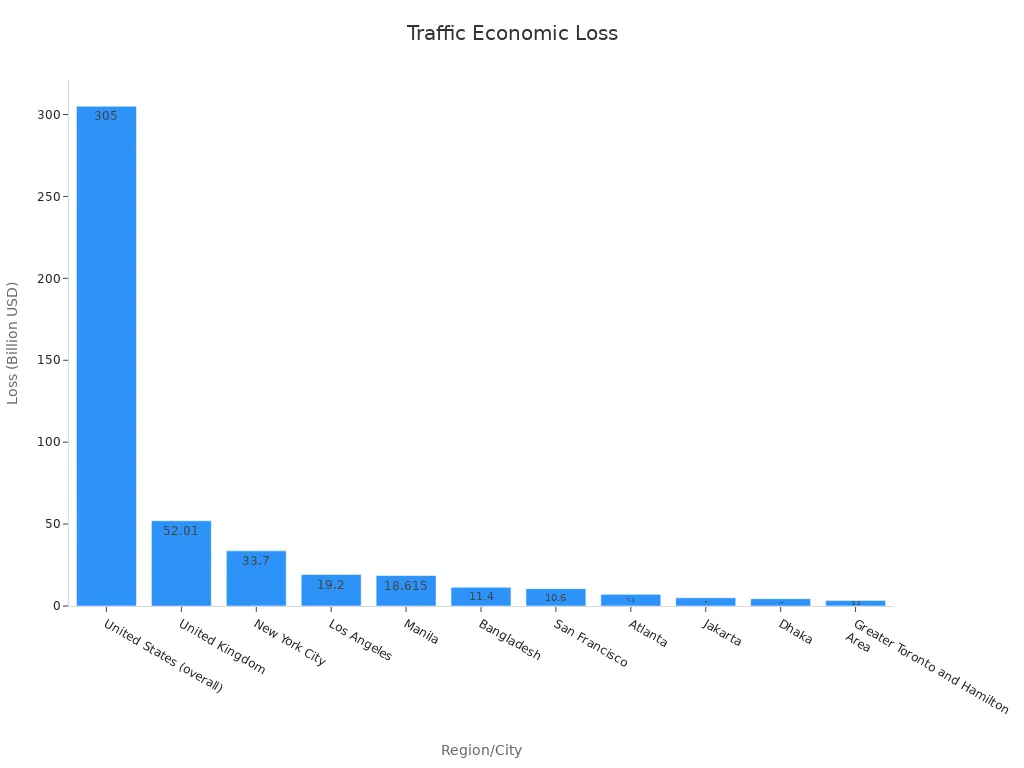
Traffic jams make the air dirtier and the city louder. This can cause more health problems and lower home values.
Parking Hassles
Finding a parking spot is often hard. You might drive around looking for one. Sometimes you pay a lot for parking. In busy places, parking is so hard you walk far to get where you need to go. Parking problems add stress and can make you late.
Tip: Some cities use parking fees and congestion charges to help with these problems, but they do not fix everything.
Car commuting has many downsides, like high costs, pollution, and daily hassles. If you want to avoid these problems, try biking or public transit for some trips.
Health and Stress
Sedentary Lifestyle
When you drive to work or school every day, you spend a lot of time sitting. Your body does not move much behind the wheel. Over time, this can hurt your health. Long car commutes often mean less time for exercise, cooking healthy meals, or even getting enough sleep. You might grab fast food because you feel rushed. You may skip your evening walk because you get home late and tired.
Researchers have found that people with long car commutes are more likely to gain weight. They often have higher body mass index (BMI) and bigger waistlines. Sitting for long periods can also raise your risk for serious health problems like Type 2 diabetes and heart disease. Some studies show that people who drive more than 10 miles each way have higher blood pressure. You might not notice these changes right away, but over the years, they add up.
Long commutes can lead to less physical activity.
You may have less time for hobbies, friends, or family.
Sitting for hours can make you feel stiff and tired.
If you want to stay healthy, it helps to find ways to move more during your day. Even a short walk before or after your drive can make a difference.
Tip: Try parking farther from your building or taking the stairs when you can. Small changes help break up long periods of sitting.
Driving Stress
Driving in traffic can feel stressful. You might worry about being late, getting stuck in a jam, or dealing with other drivers. Your heart beats faster. Your hands grip the wheel. Sometimes, you feel tense before you even start your day.
Studies show that longer commutes raise your stress levels. Scientists measured a stress hormone called cortisol in commuters. People with longer rides had much higher cortisol levels when they arrived at work. They also felt more tired and had trouble focusing. Traffic jams and unpredictable delays make things worse. You may feel anxious, frustrated, or even angry.
Traffic noise and air pollution add to the stress.
You may have less time for family, friends, or relaxing activities.
Some people say their commute gives them time to think or listen to music. For many, though, the stress outweighs the benefits. Over time, high stress can hurt your mental and physical health. It can lead to headaches, trouble sleeping, and even depression.
Note: If you notice stress building up, try deep breathing or listening to calming music in the car. Taking breaks and planning your route ahead of time can also help.
Car commuting can take a toll on both your body and your mind. If you feel the effects, you are not alone. Many people look for ways to make their drive less stressful and more active. Even small changes can help you feel better each day.
Pros and Cons Comparison
Side-by-Side Table
Sometimes, it helps to see everything in one spot. A table lets you compare bike and car commuting easily. You can quickly notice what is different. This helps you decide what is most important. Experts say tables make it easier to understand main ideas. They are useful when you have a lot to think about.
Aspect | Bike Commuting: Advantages | Bike Commuting: Disadvantages | Car Commuting: Advantages | Car Commuting: Disadvantages |
|---|---|---|---|---|
Environmental Impact | Zero emissions, less pollution | Bike production uses energy, waste | Carries more cargo, group travel | High emissions, uses fossil fuels |
Cost | Low cost, cheap to maintain | Risk of theft, gear costs | Good for long trips, flexible | Expensive fuel, repairs, insurance |
Health & Fitness | Keeps you active, boosts fitness | Can cause soreness, injury risk | Comfortable, less effort needed | Sedentary lifestyle, less exercise |
Practicality & Safety | Great for short trips, easy parking | Safety risks in traffic, weather | Fast on highways, weatherproof | Traffic jams, parking problems |
Convenience | Avoids traffic, easy to park | Needs secure storage, less cargo room | Private space, set your schedule | Parking stress, traffic delays |
Tip: Look at this table if you want to compare fast. It shows the main points without reading everything.
Quick Reference
You may not have time to read a long post every day. That is why a quick list is helpful. Studies show that short summaries help you remember better. They also help you make choices faster. Use this list to check the pros and cons before you pick how to get to school or work.
Bike Commuting:
👍 Saves money on gas and parking
👍 Improves your health and fitness
👍 Cuts down on pollution
👎 Depends on weather and your energy
👎 Less safe in heavy traffic
👎 Hard to carry big loads
Car Commuting:
👍 Comfortable in any weather
👍 Great for long distances and groups
👍 Lots of storage space
👎 Costs more for gas, repairs, and insurance
👎 Adds to air pollution and traffic
👎 Can be stressful in traffic jams
Note: If you want to choose wisely, use both the table and the list. They help you see the pros and cons in just a few seconds.
Commute by Bicycle or Car: Choosing What Fits
Choosing how you get to work or school can feel tricky. You want something that fits your life, your needs, and your local area. Let’s break down the key things you should think about before you pick your main way to commute by bicycle or car.
Key Factors
Distance
Think about how far you need to travel each day. If you live close to your job or school, you might find it easy to commute by bicycle. Short trips are perfect for biking. You get exercise and fresh air, and you skip traffic. If your trip is longer, a car might save you time and energy. Some people use both—a bike for short rides and a car or train for longer parts.
Health
Your health matters. If you want to stay active, biking instead of driving helps you move more. You build strength and feel better. If you have health problems or need to avoid too much physical effort, a car could be the safer choice. You can also mix things up. Try biking on good days and driving when you need a break.
Local Climate
Weather can change your plans fast. If you live where it rains or snows a lot, you might not want to commute by bicycle every day. Hot summers or cold winters can make biking tough. Cars keep you dry and warm, but you miss out on the outdoor fun. Some people use public transit or ride-sharing when the weather is bad. You can always adjust your routine to match the season.
Budget
Money is a big factor. Biking costs less than driving. You save on gas, parking, and repairs. If you want to cut costs, try to commute by bicycle as much as you can. Cars cost more, but they give you comfort and speed. Some people use both, depending on their budget each month.
Cargo Needs
Think about what you need to carry. Bikes work well for small bags or backpacks. If you need to bring lots of stuff—like sports gear, groceries, or tools—a car gives you more space. Some people use bike trailers or baskets, but there are limits. You can always plan your trips to match what you need to bring.
You have lots to think about when choosing how to get around. Bike commuting keeps you active, saves money, and helps the planet. Car commuting gives you comfort, speed, and space, but it costs more and adds to pollution.
Traffic jams hurt health and waste time.
Try mixing things up. Maybe ride your bike once a week or carpool with friends. Take a moment to look at your habits—small changes can make your commute better!
FAQ
What should you wear when biking to work?
You should wear comfortable clothes that let you move easily. Bring a rain jacket if the weather looks bad. Bright colors help cars see you. A helmet keeps you safe. You can pack work clothes in a backpack or pannier.
How do you keep your bike safe from theft?
Lock your bike with a strong U-lock or chain. Park in busy, well-lit areas. Use bike racks when possible. Take small items, like lights or your seat, with you. Some people also register their bikes with local police.
Can you combine biking with public transportation?
Yes! Many buses and trains let you bring your bike. You can ride part of the way and then hop on public transit. This works well for long trips or bad weather. Check your city’s rules before you go.
Is biking faster than driving in the city?
Sometimes, yes. In heavy traffic, you can pass cars and avoid long waits. Bike lanes help you move quickly. For short trips, biking often saves time. For longer distances, driving usually wins.
What if you need to carry a lot of stuff?
You can use a backpack, basket, or panniers on your bike. For big loads, try a bike trailer. If you need to move furniture or lots of groceries, a car works better. Plan your trips based on what you need to carry.
How do you stay safe while biking in traffic?
Stay alert and follow traffic rules. Use hand signals to show turns. Wear bright clothes and use lights at night. Ride in bike lanes when you can. Make eye contact with drivers at intersections.
Does biking help the environment?
Yes! Biking creates zero emissions. You help cut air pollution and traffic. Every bike trip replaces a car trip, which means less CO2 in the air. Even short rides make a difference for your city and the planet.
What are some ways to make car commuting less stressful?
Try leaving earlier to avoid traffic. Listen to music or podcasts. Take deep breaths if you feel tense. Carpool with friends to share the ride. You can also plan your route to skip busy roads.